Dec 10, 2024
Wearable Bio Necklace: From Childhood Trauma to Art
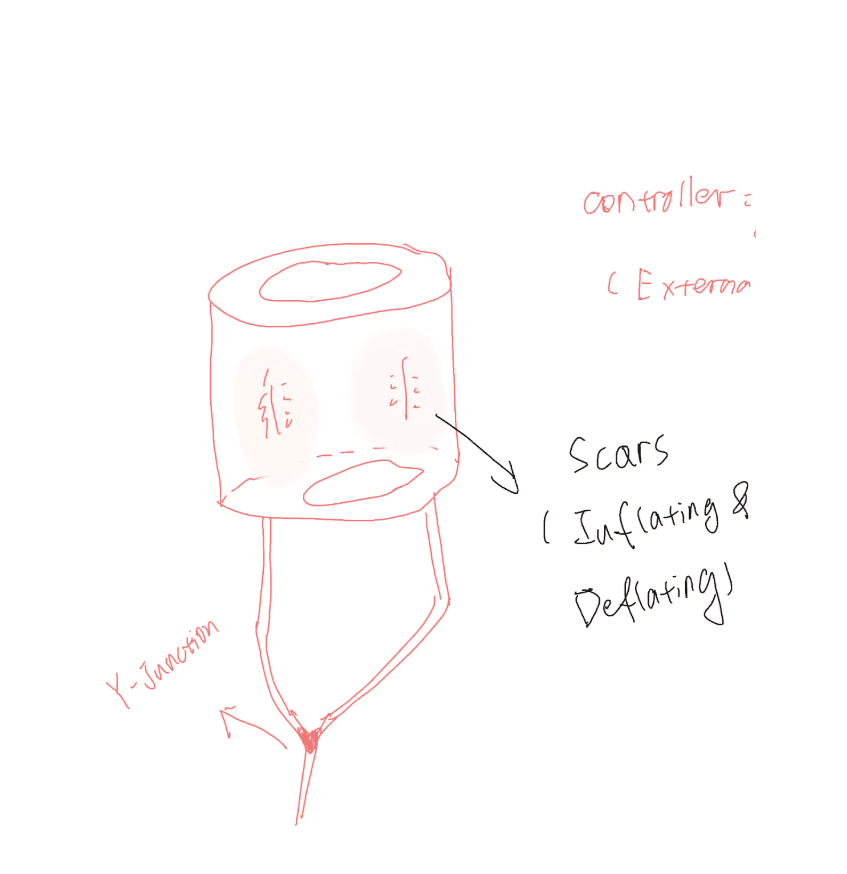
This is an interactive art that can be worn around the neck. The key interactive effect is that when the work is inflated, the two “scar” shaped portions on the piece will inflate. This displays a dynamic impact.
Inspiration
The inspiration for my work came from a relative of mine, when I was little, I was playing hide and seek with my friends, he accidentally fell off the roof of a house and had a craniotomy on his whole head, so he was left with a scar on his head that could never be erased, his friends who didn't know the reason behind it would make fun of him when they saw his scar, but he was so shy that he would run home to me and cry every time, all I wanted was that this scar could happen when a person touched it, the scar would act like it was helping my brother to fight back. What I want is for this scar to be able to happen so that when people touch it, the scar fights back as if it is helping my brother.
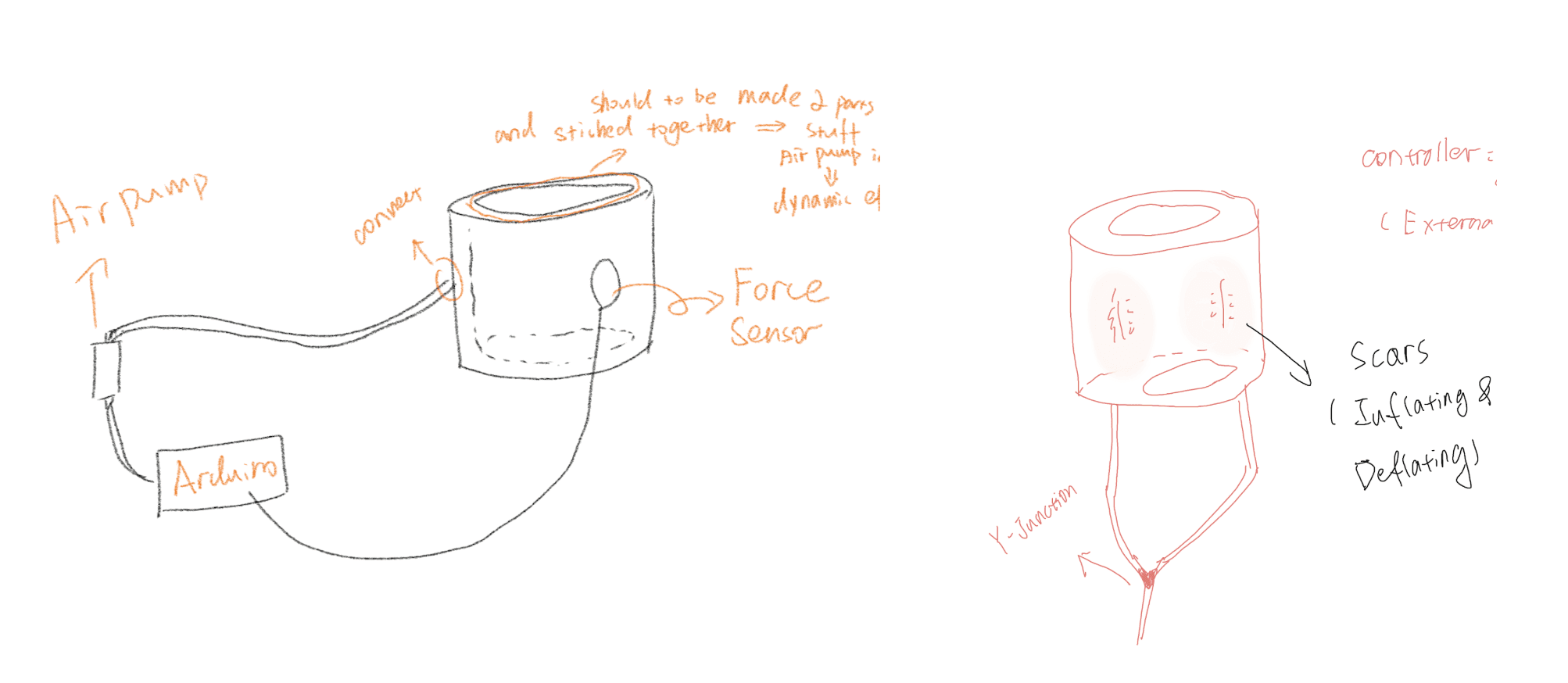
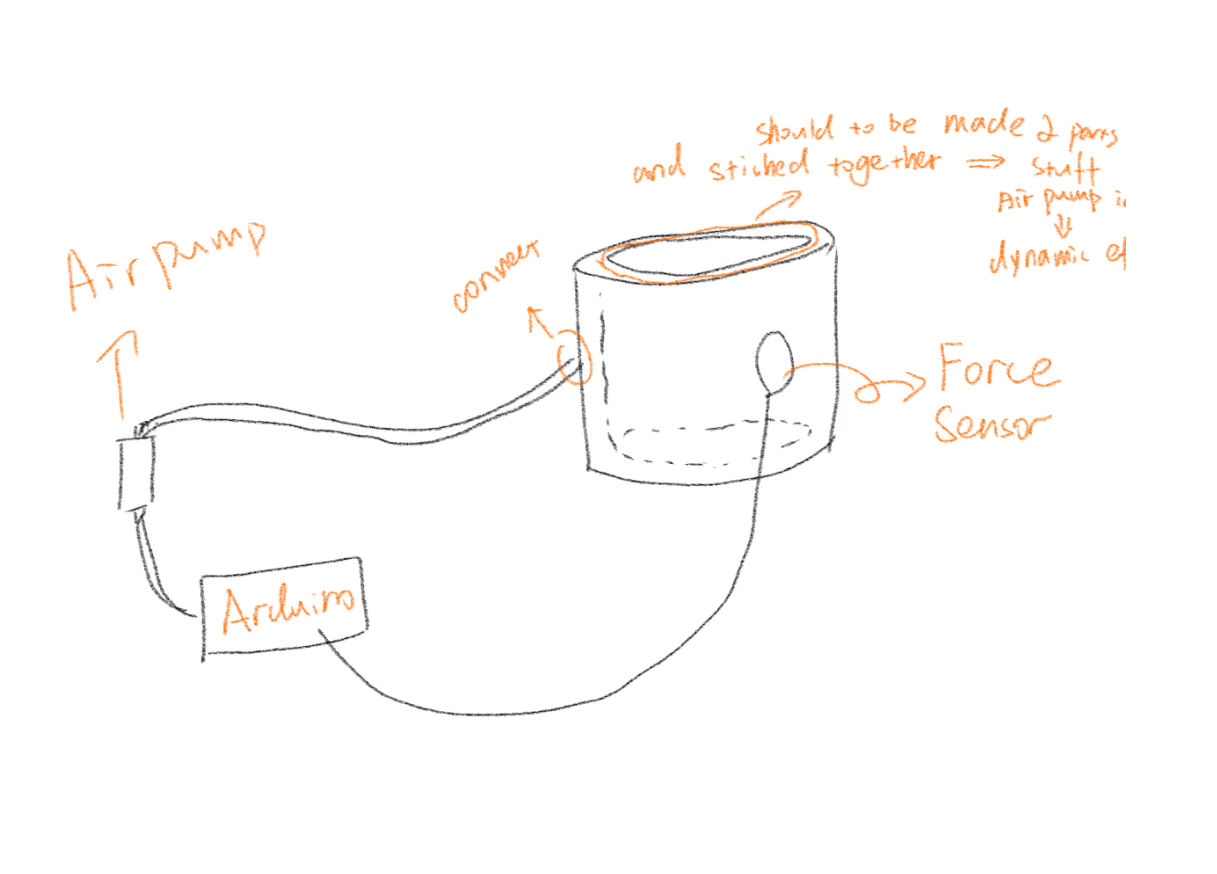
Initial & Final Sketches
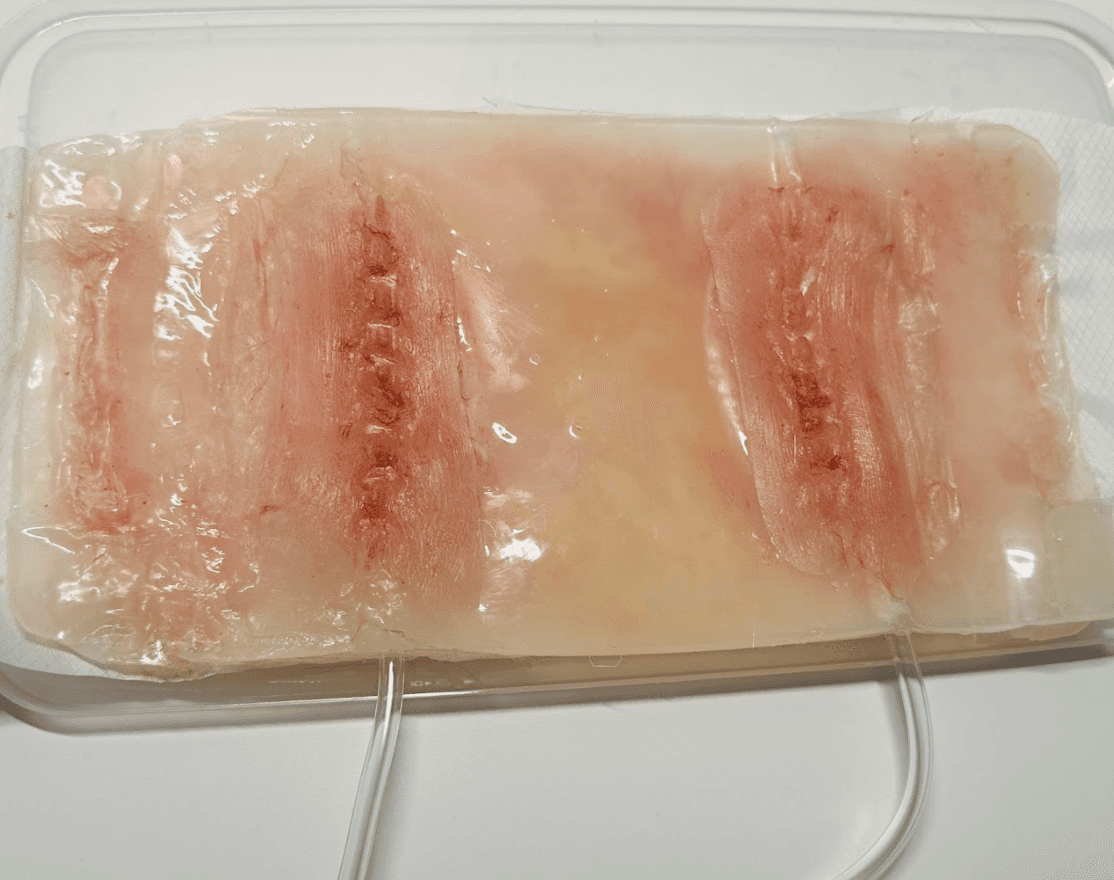
Finished Product
How to operate the air pump and achieve the effect of inflation?
After successfully laminating the final product, I began dyeing (I tried adding the dyeing material when mixing the solution but was unable to achieve the effect I wanted, so I finally chose to paint the finished product with a brush).
Process of Creating Project Model
My work begins with the conception of the principal theme. After I have decided on my idea and made a drawing, I proceed to explore for ways to execute my work. I ultimately decided that I wanted to produce a biomimetic material design, so I used silicone to create a material that is similar in hue to skin and can highlight “scars”. This not only makes it visually more fascinating, but also better suits the fundamental theme of my work.
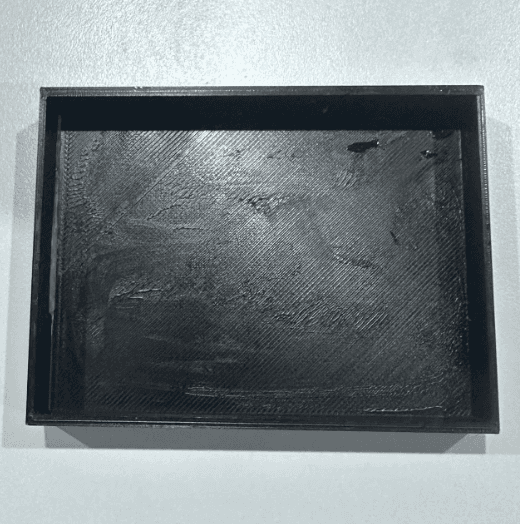
After I decided on the material, I proceeded with 3D modeling. I used ZBrush and TinderCAD to construct the models for the scar and the reverse film molds. After multiple revisions and rebuilding of my models. Following the creation of the mold, I procured silicone ingredients and many supplementary tooling components, subsequently conducting repeated film-pouring trials. The poured sample components were utilized to enhance my mold further. I finally decided on three main molds as the tools for this work: the scar mold, the interior inflated mold that requires secondary reverse film, and the sample mold.
At the beginning, I attempt to design a shshcihcidhscuihcdiuhduishcuidhc
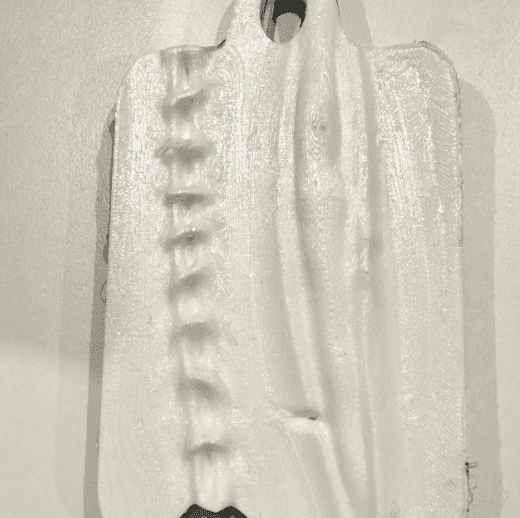
scar model
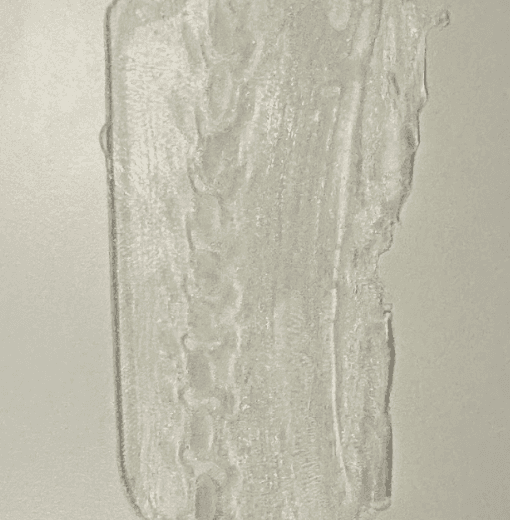
scar sample
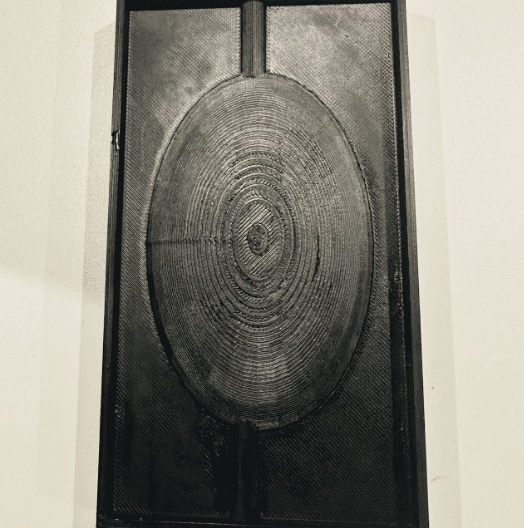
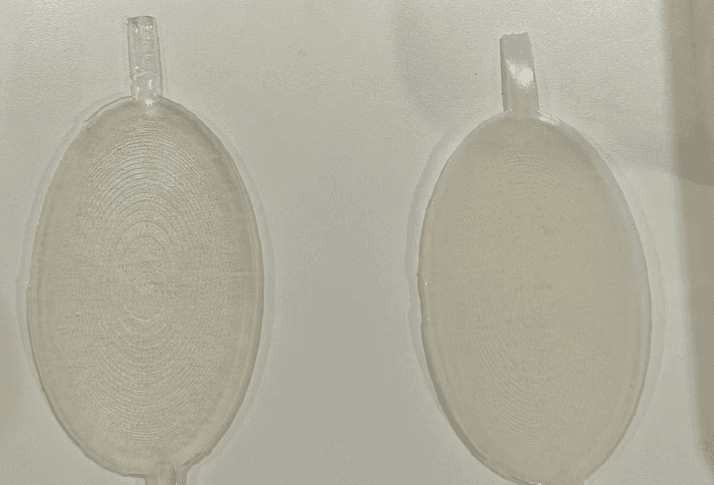
model for internal inflation
test sample model
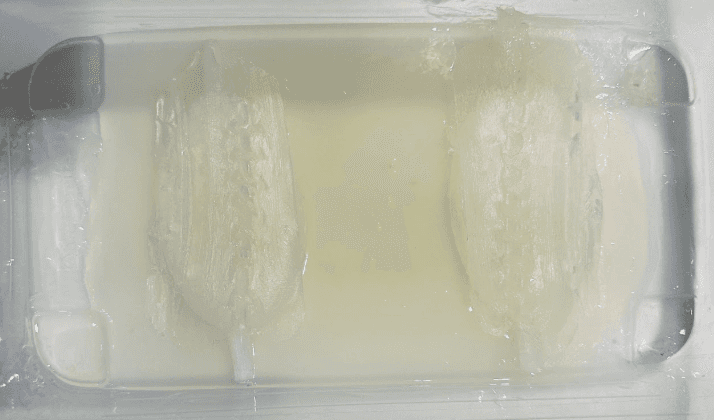
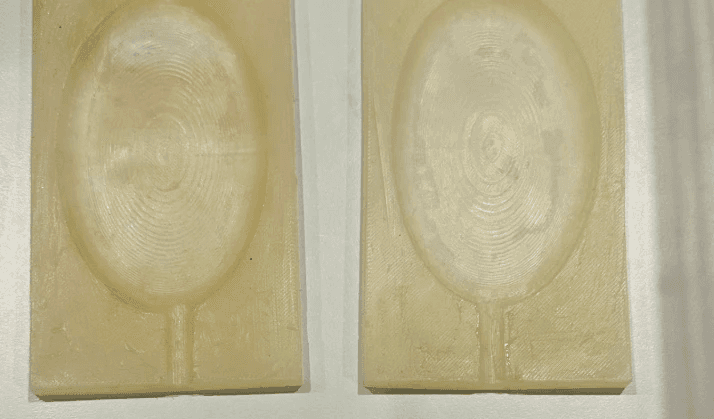
I commenced the process of pouring the film for each small material required for the project in distinct batches after identifying the primary mold. For instance, the scar and the silicone material required for the air intake, which must be molded separately. I first poured the silicone out of the 3D mold for the intake of air mold, and then I poured the material that can be molded twice into the silicone rubber mold. Afterward, I inserted the mold that can be molded twice into the mold case to complete the final project. This is employed to generate the ultimate product.
I commenced the process of pouring the film for each small material required for the project in distinct batches after identifying the primary mold. For instance, the scar and the silicone material required for the air intake, which must be molded separately. I first poured the silicone out of the 3D mold for the intake of air mold, and then I poured the material that can be molded twice into the silicone rubber mold.
Afterward, I inserted the mold that can be molded twice into the mold case to complete the final project. This is employed to generate the ultimate product.
Typical Application Circuit (The Air Pump and 5V Power Supply components were not found in the software, so the DC Motor and 9V components were used as substitutes to display the circuit diagram.)
Trouble Shooting
Final
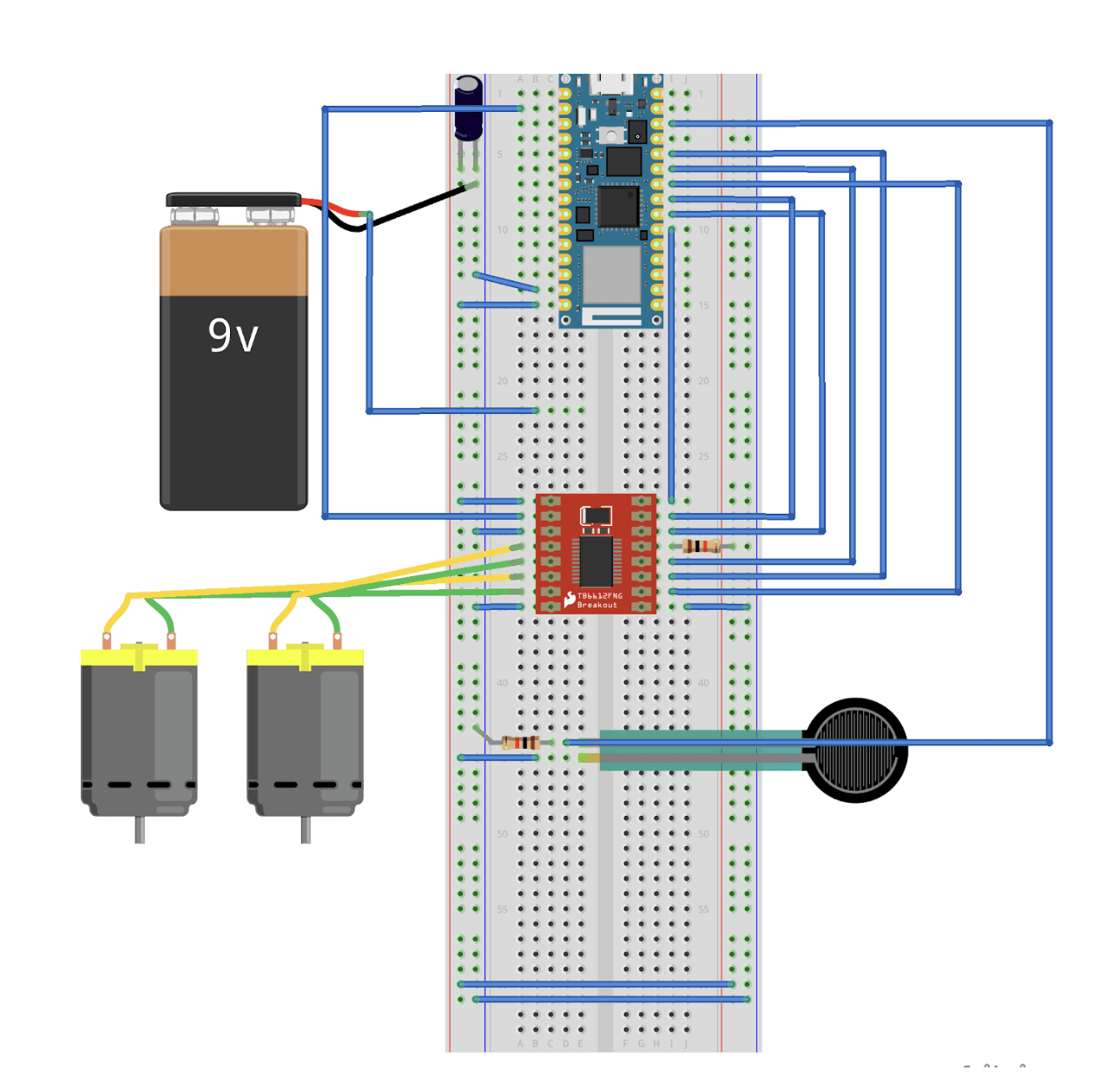
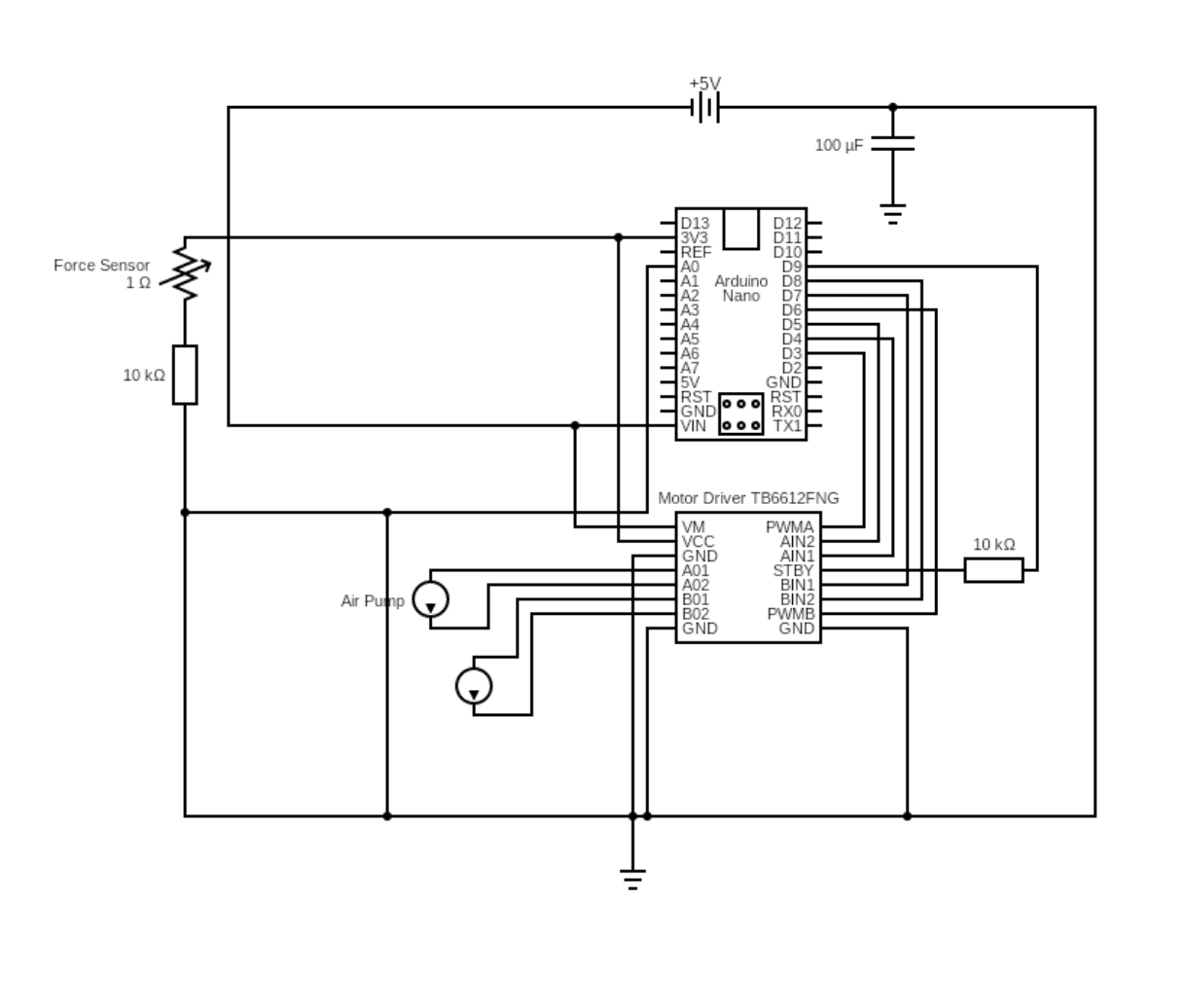
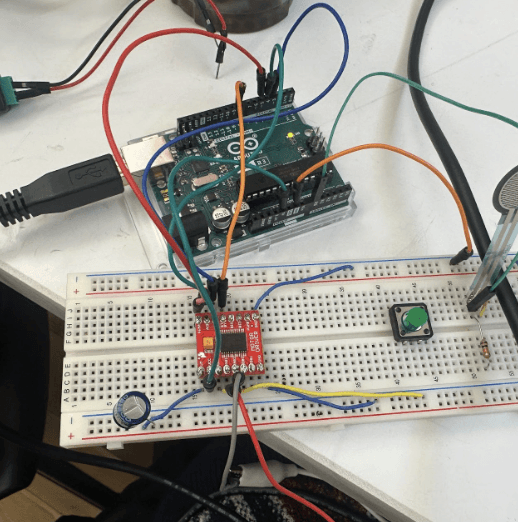
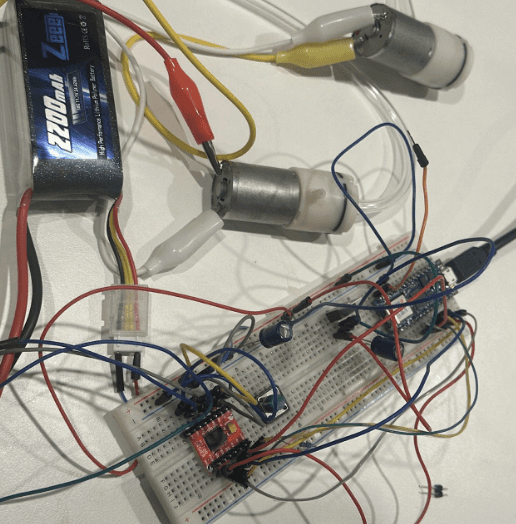
Connect Circuits
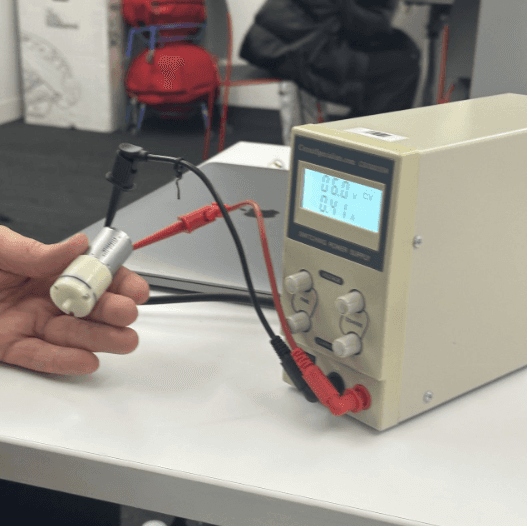
Initially power choose
In terms of the circuit diagram connection, the difficulties I encountered were as follows:
VM? VCC?
I misidentified the VM and VCC connections of the motor driver with the Arduino Vin interface.
Be careful when you soldering
The motor driver I manually soldered had two connections that became loose during previous handling, resulting in weak connections.
Watch out! STBY!
The motor driver I manually soldered had two connections that became loose during previous handling, resulting in weak connections.
Do not burn the breadboard!
The circuit connections were compromised as a consequence of the breadboard's combustion during my previous testing