Jan 12, 2024
How to Create World Class Products
What is a portfolio?
A portfolio is any method used to showcase your best work. No matter the industry, fashion, architecture, or design, there are tons of ways to display your work in order to get a new job or expand your audience or customers.
Types of design portfolios
Depending on the type of design work that you do, there are different portfolio formats that will be best suited for your needs. A design portfolio can be digital in the form of a website, slideshow, or PDF but it can also be analog in the form of a print book or poster.
Graphic design portfolio
When it comes to graphic design, designing a PDF as your portfolio is becoming more and more popular to highlight your work and PDF design skills. Using tools like InDesign and Photoshop you can create multi-page PDFs that can be fine-tuned and formatted any way you like. With new software, like Framer, it's becoming even easier to create a PDF online and share it in no time. The result of your PDF portfolio will be a brochure or one-pager piece that shows off examples of your best work along with the descriptions of each project and more related information.
UX design portfolio
For UX designers, online portfolios are probably the most popular type today. This can be in the form of a simple one-page website with your contact information or a more thorough online gallery site. If your main discipline is web design, a portfolio website is the choice for you. It serves as an example itself of your web design skills, as well as highlighting your best work where it’s meant to be seen.Portfolio websites come with many benefits, especially as most of our work is done online. First, they can show off design properties like animation and interactivity.
As an important part of UX design, it’s important to show these aspects so viewers get the full experience of your designs. Next, website portfolios are super easy to share. You can include the link in your social media bios as well as send the link to anyone at any time. Your work will become more readily available this way. Finally, online portfolios are a great way to show off your personality. As the more new-age mention of displaying your work, you are less constrained by the rules of the classic print portfolio.
When going the online portfolio route there are some drawbacks. First, website portfolios often require knowledge of code to create. This can be a blocker for many UX designers. However, there are increasingly more tools like Framer that allow you to create a design portfolio without code. Next, you have to keep in mind the constraints of the web. Things like breakpoints, different browsers, and rendering issues that you wouldn’t have to think about in print portfolios. Finally, website portfolios can be more time-consuming to create depending on how many site pages you need.
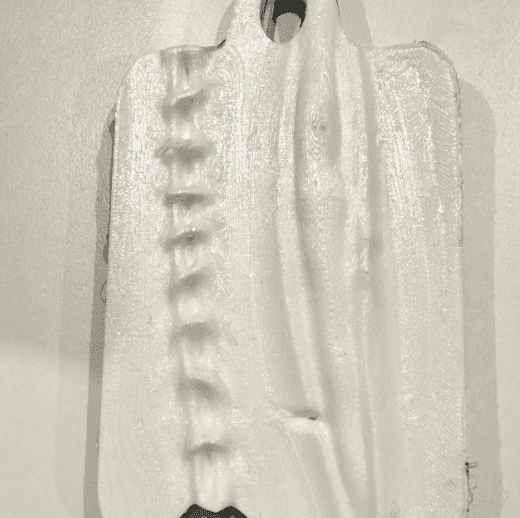
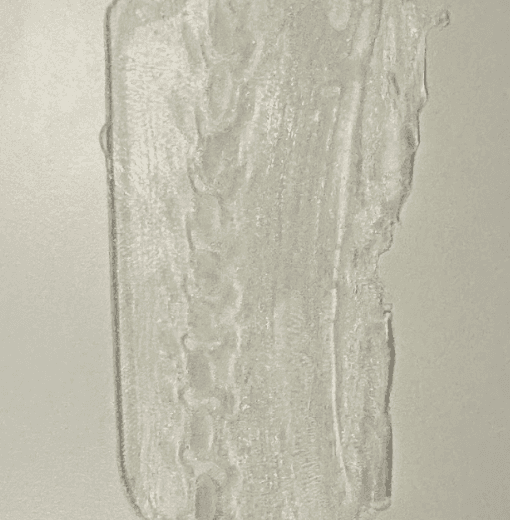
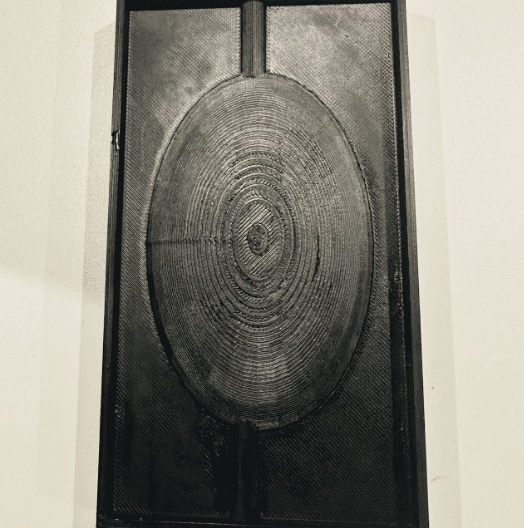
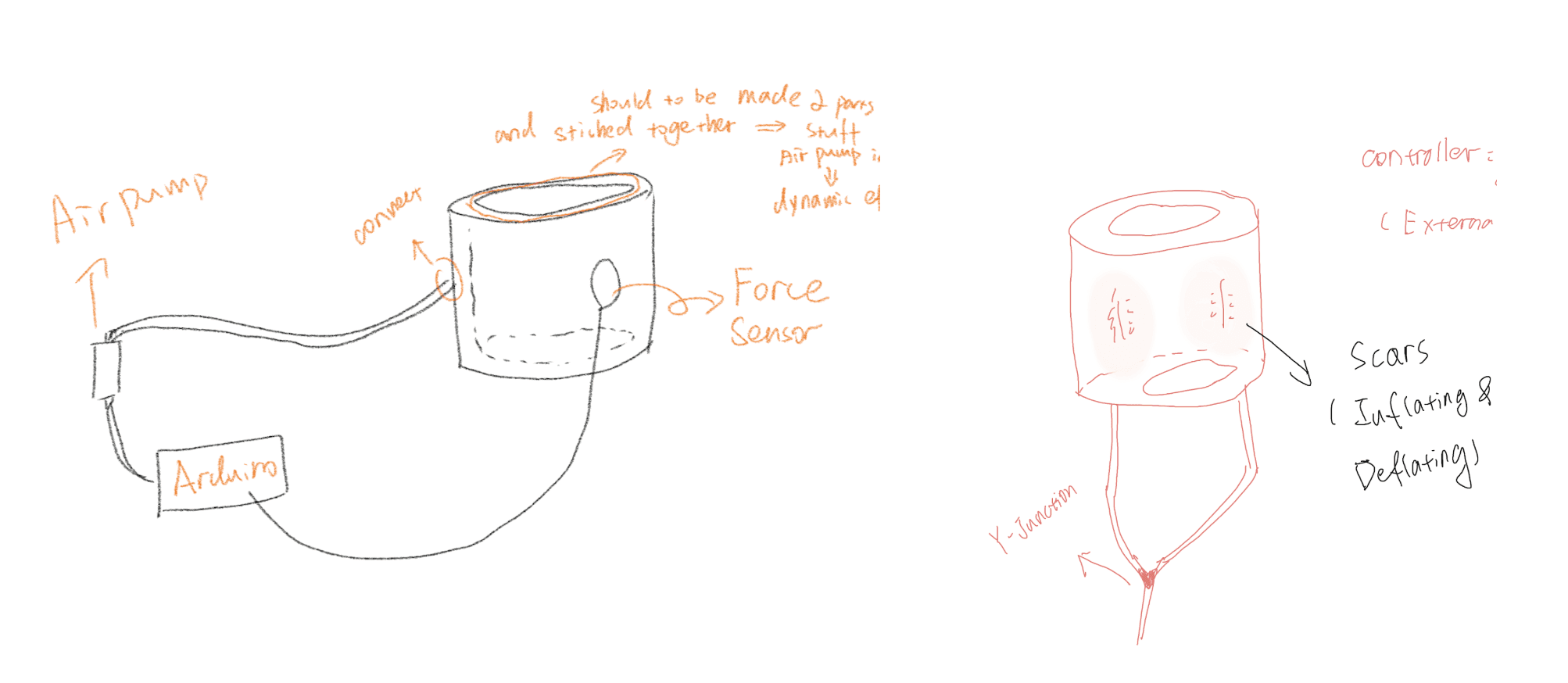
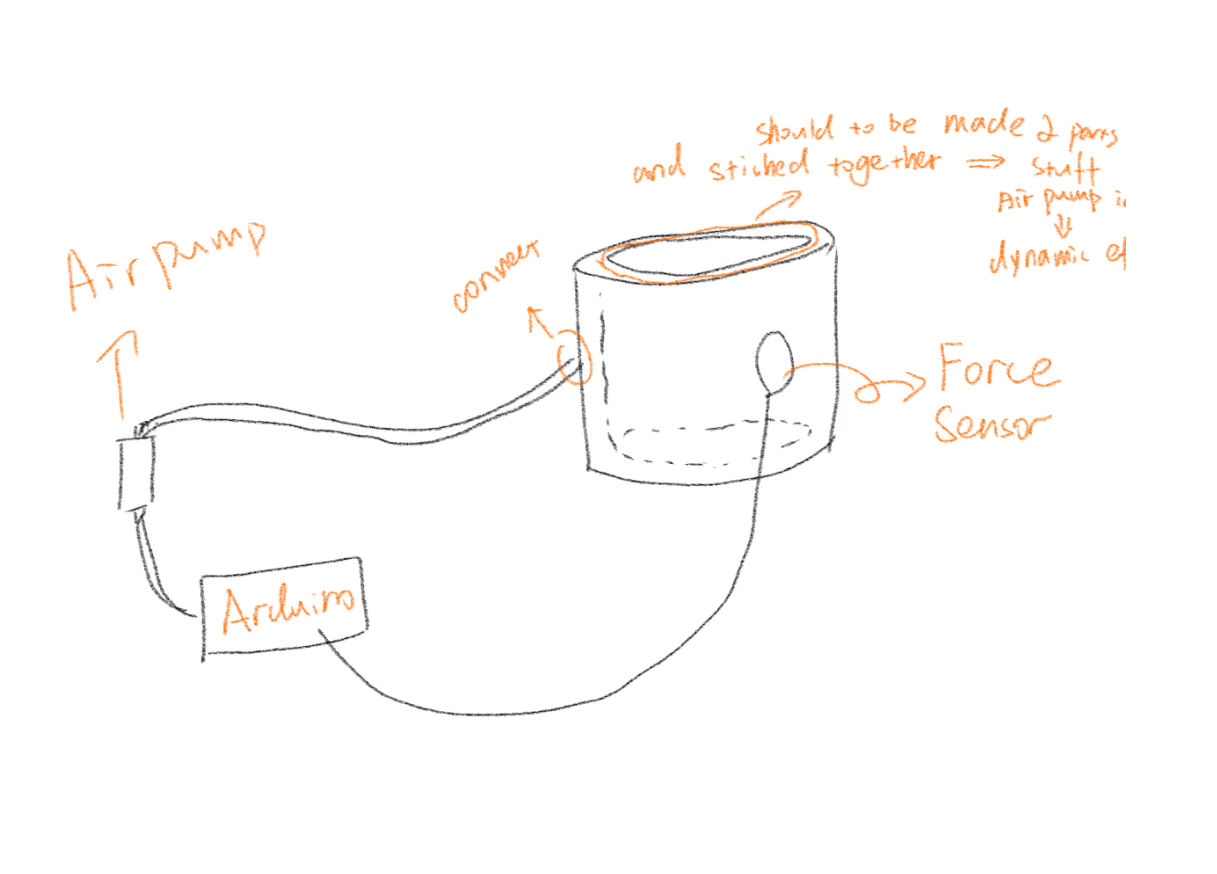
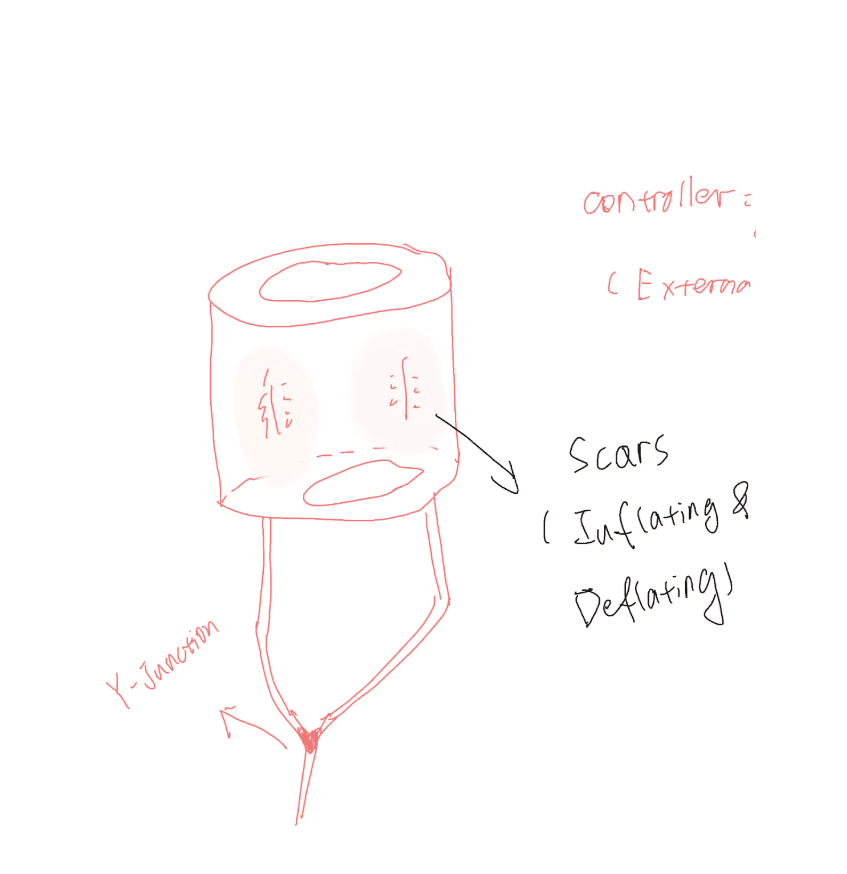
Initial & Final Sketches
Finished Product
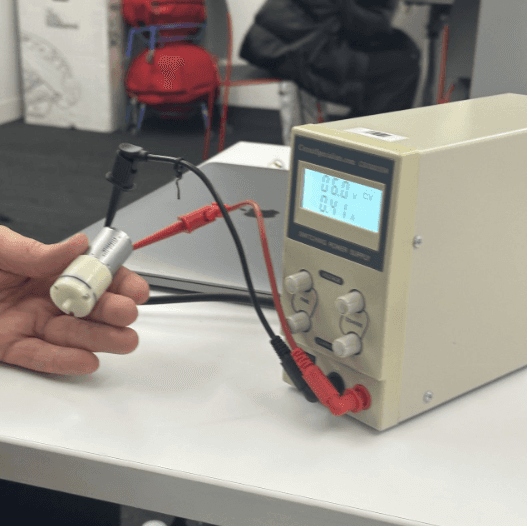
How to operate the air pump and achieve the effect of inflation?
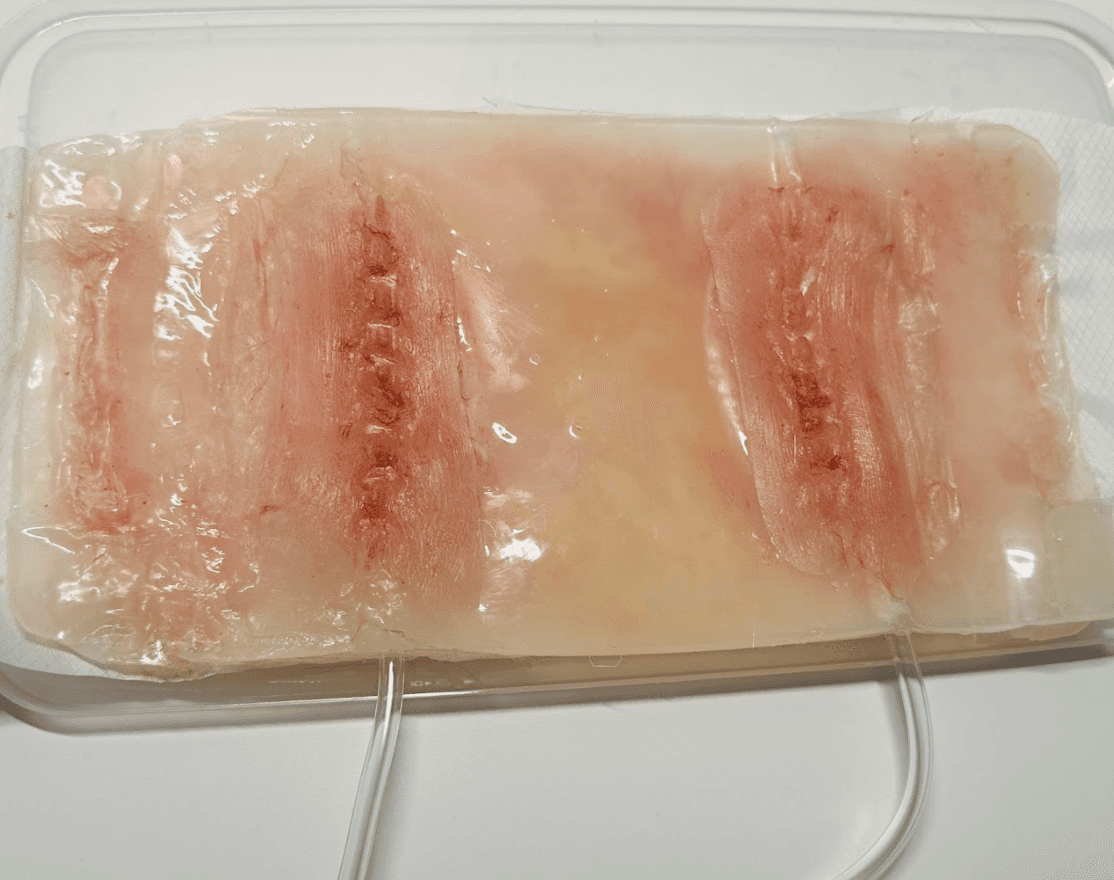
After successfully laminating the final product, I began dyeing (I tried adding the dyeing material when mixing the solution but was unable to achieve the effect I wanted, so I finally chose to paint the finished product with a brush).
Process of Creating Project Model
My work begins with the conception of the principal theme. After I have decided on my idea and made a drawing, I proceed to explore for ways to execute my work. I ultimately decided that I wanted to produce a biomimetic material design, so I used silicone to create a material that is similar in hue to skin and can highlight “scars”. This not only makes it visually more fascinating, but also better suits the fundamental theme of my work.
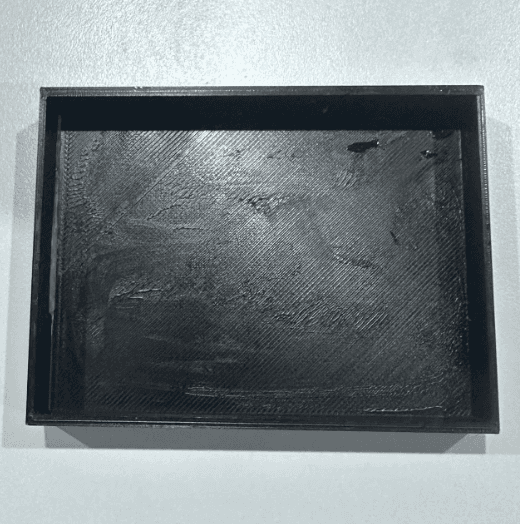
After I decided on the material, I proceeded with 3D modeling. I used ZBrush and TinderCAD to construct the models for the scar and the reverse film molds. After multiple revisions and rebuilding of my models. Following the creation of the mold, I procured silicone ingredients and many supplementary tooling components, subsequently conducting repeated film-pouring trials. The poured sample components were utilized to enhance my mold further. I finally decided on three main molds as the tools for this work: the scar mold, the interior inflated mold that requires secondary reverse film, and the sample mold.
At the beginning, I attempt to design a shshcihcidhscuihcdiuhduishcuidhc
scar model
scar sample
model for internal inflation
test sample model
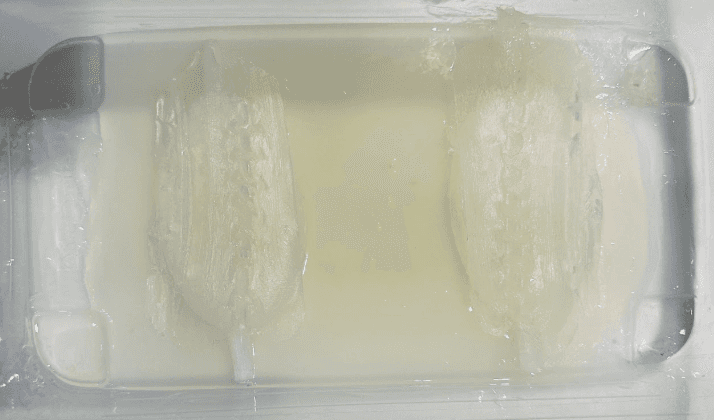
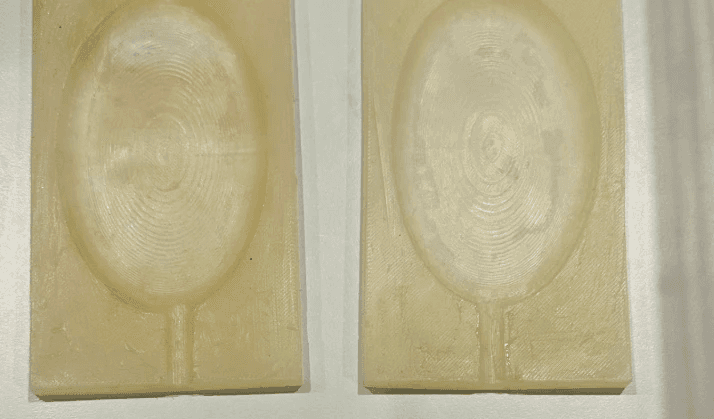
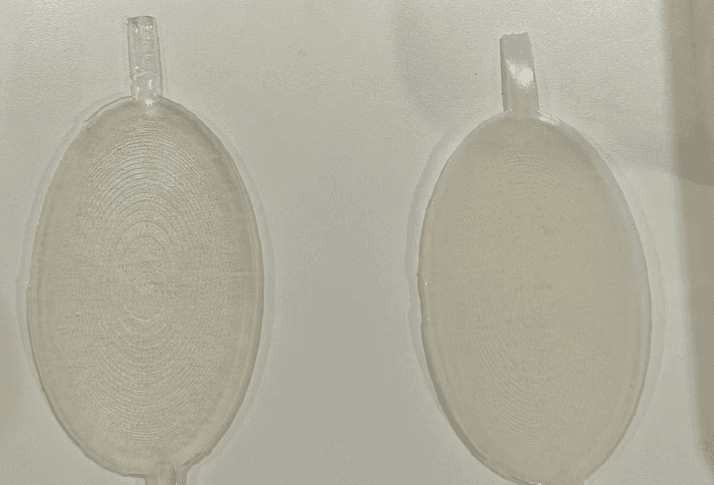
I commenced the process of pouring the film for each small material required for the project in distinct batches after identifying the primary mold. For instance, the scar and the silicone material required for the air intake, which must be molded separately. I first poured the silicone out of the 3D mold for the intake of air mold, and then I poured the material that can be molded twice into the silicone rubber mold. Afterward, I inserted the mold that can be molded twice into the mold case to complete the final project. This is employed to generate the ultimate product.
I commenced the process of pouring the film for each small material required for the project in distinct batches after identifying the primary mold. For instance, the scar and the silicone material required for the air intake, which must be molded separately. I first poured the silicone out of the 3D mold for the intake of air mold, and then I poured the material that can be molded twice into the silicone rubber mold.
Afterward, I inserted the mold that can be molded twice into the mold case to complete the final project. This is employed to generate the ultimate product.
Typical Application Circuit (The Air Pump and 5V Power Supply components were not found in the software, so the DC Motor and 9V components were used as substitutes to display the circuit diagram.)
Trouble Shooting
Final
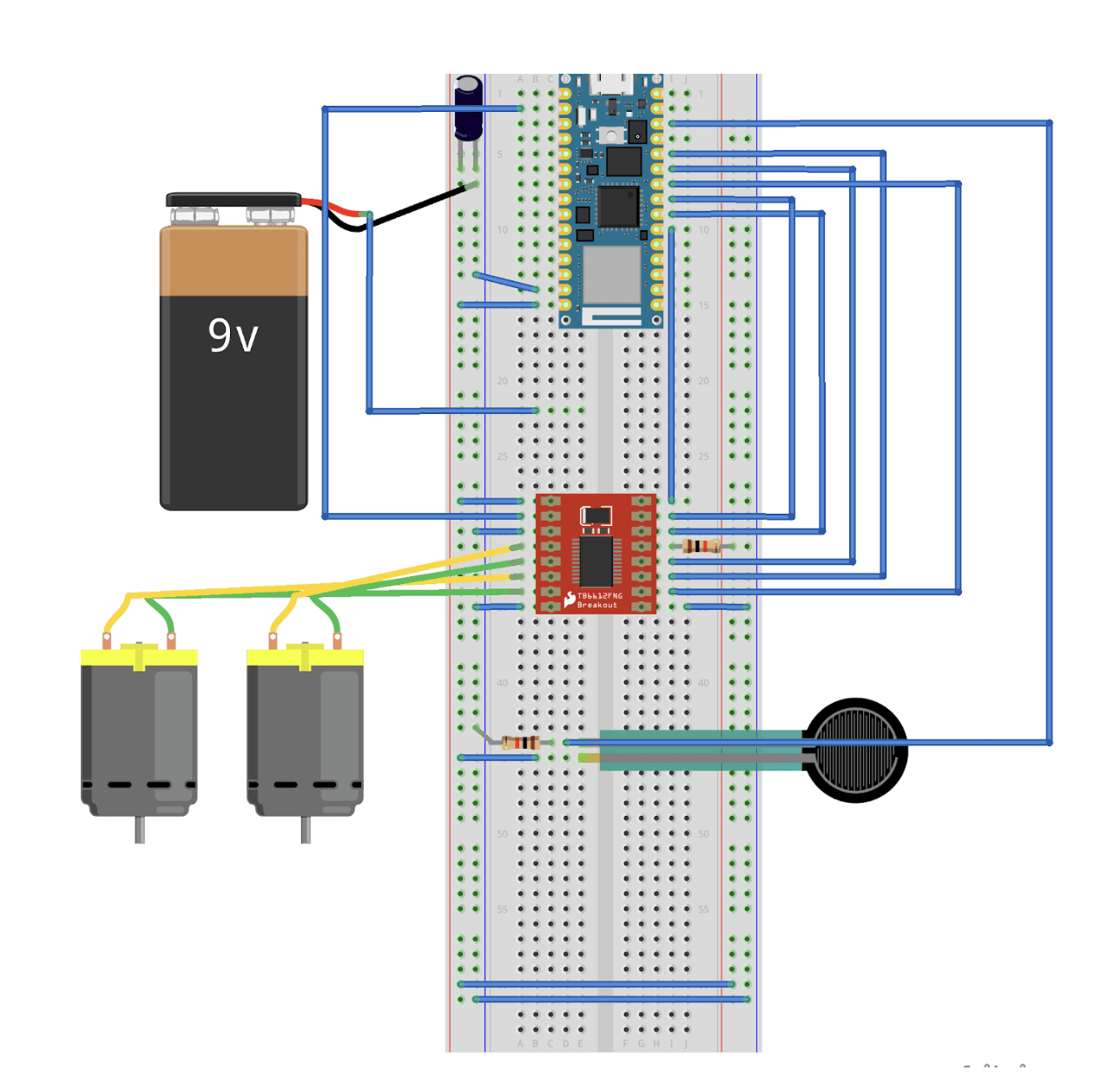
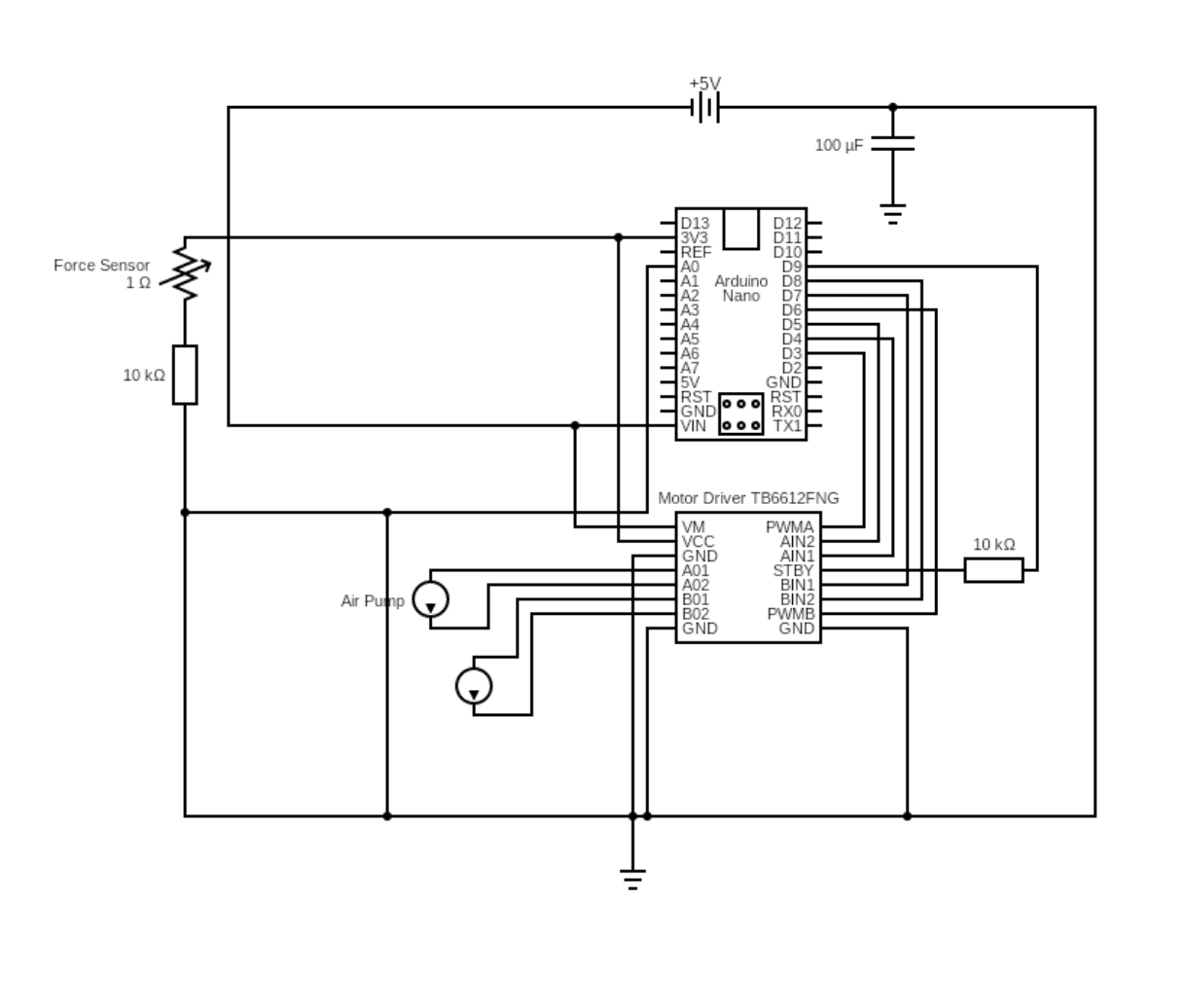
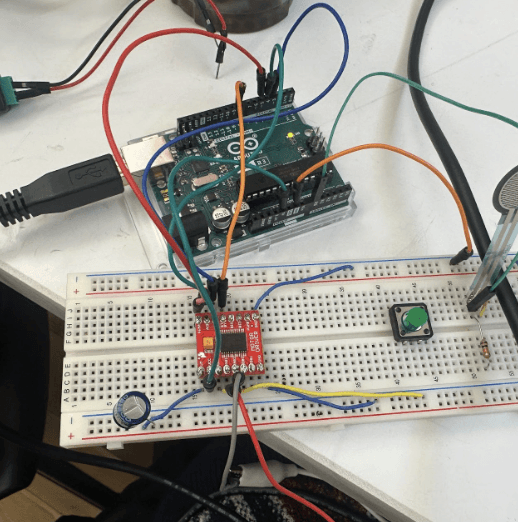
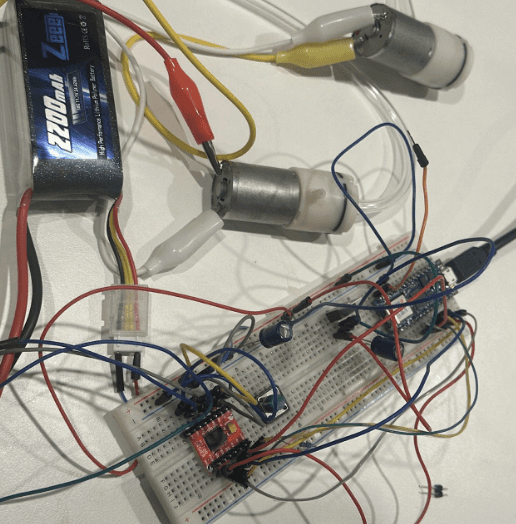
Connect Circuits
Initially power choose
In terms of the circuit diagram connection, the difficulties I encountered were as follows:
VM? VCC?
I misidentified the VM and VCC connections of the motor driver with the Arduino Vin interface.
Be careful when you soldering
The motor driver I manually soldered had two connections that became loose during previous handling, resulting in weak connections.
Watch out! STBY!
The motor driver I manually soldered had two connections that became loose during previous handling, resulting in weak connections.
Do not burn the breadboard!
The circuit connections were compromised as a consequence of the breadboard's combustion during my previous testing